

Next up... the 'Wing Walk'
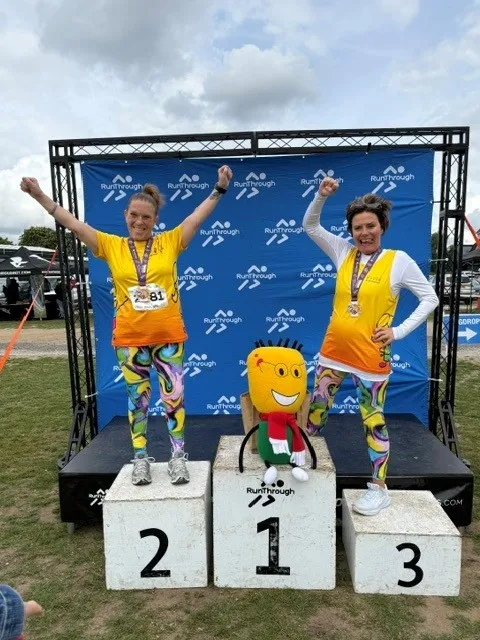
At 72 years of age - Phillipa is amazing!
Following her Skydive in 2024, Phillipa takes on an incredible 'Wing Walk' at the end of July this year.
So what is a 'Wing Walk'?... Imagine...
Strapped to the top wing of a roaring Boeing Stearman, you’re lifted into the open sky with nothing between you and the wind but courage. The engine thunders beneath your feet. The air tears past at over 120mph. And suddenly, the world drops away.
You stand — exposed, unshielded, unstoppable — as the pilot throws the aircraft into sweeping banks, low passes, and heart‑pounding climbs over the historic Duxford airfield. Every second is a rush of noise, speed, and pure adrenaline.
Down below, friends and family watch in anticipation. Up here, it’s just you, the wind, and the roar of the engine.
When your feet touch the ground again, you’re not the same person who took off. You’ve done something bold. Something unforgettable. Something most people will only ever dream of. And you've done it for Stickler Syndrome UK to help raise awareness, aid research, and provide support for people and families with Stickler syndrome.
Phillipa shared her story with Stickler Syndrome UK:
"I don't have Stickler syndrome myself, but five members of my family do.
I am 72 years old. My brother is 58, and my sisters are 55 and 51. I have seven nieces and nephews ranging in age from 13 to 27. Five of them are not affected by Stickler syndrome. However, my brother’s two daughters, aged 13 and 15, both have the condition.
The 15-year-old has recently been admitted for bilateral replacements, but due to significant blood loss, only one hip was replaced, with the second scheduled quickly afterwards. These replacements will undoubtedly transform her life, after spending five young years on crutches and with the use of a wheelchair.
Their grandfather also had bilateral hip replacements. At the age of 15, he was an inpatient for 18 months and spent nine months in plaster. The medical staff were baffled at the time. Neither of his parents nor his four siblings were affected, and none of their children or grandchildren have Stickler syndrome.
It has been an incredibly confusing pathway for our family. Dad was told it was very doubtful his condition would be passed on. Over the years, surgeries have taken place at Addenbrooke's Hospital in Cambridge, King's Mill Hospital in Mansfield, and Queen's Medical Centre, Nottingham. Including my father’s lifelong cycle of operations, our amazing family has undergone approximately 60-70 surgeries in total. Sadly, our dad died due to a post-operation infection which led to sepsis after knee surgery.
My brother and his daughters have undergone eye surgery to avoid retinal detachment after evidence of tears in the retina. Retinal detachment carries a high risk of blindness. Three members of my family wear hearing aids, all attributed to Stickler syndrome. They continue to receive ongoing steroid injections, with further surgeries pending (including hip replacements for my youngest niece, a second ankle replacement for my brother, and two shoulder replacements for my sisters). In addition to joint replacements, there have also been pelvic bone grafts. My niece was born with a cleft palate which triggered a Stickler syndrome diagnosis.
My youngest sister had her first hip replacement at just 14 years of age. Unfortunately, it was unsuccessful, and since then she has undergone five further hip replacements on the same side.
In our family, the onset of Stickler syndrome typically began between the ages of eight and nine. When I lived at home, crutches were as much a part of the furniture as anything else. For years, letters from consultants and genetic specialists offered little clarity — no one truly understood what was causing the severe mobility issues. In 1969, everything changed with further medical developments, although the condition has always presented in varying degrees of severity and has sometimes gone undiagnosed. I have read that Stickler syndrome is described more as a disorder than a disease, and technically it is not always classified as a disability. Yet in reality, it can be a horrid, debilitating condition — deeply painful and one that impacts daily life and ambitions in profound ways.
Despite this, I have a family of superheroes — stoic individuals who have faced Stickler syndrome with determination and without complaint.
The two younger girls both play wheelchair basketball. One of them was a very talented footballer, but Stickler syndrome forced her to give up the sport she loved.
Stickler Syndrome UK urgently needs more funding to aid research, to help find earlier pathways to diagnosis which will help prevent loss of sight, greater public awareness, and more education for medical professionals."